 019-713 9800
Stroke Recovery in Johor Bahru: The Complete Guide for Patients & Families
A stroke can change a person’s life in an instant.
One moment, your loved one is speaking, walking and carrying out daily activities as usual. The next, they may struggle to move one side of their body, speak clearly, swallow safely or even recognise familiar faces.
For families in Johor Bahru, a stroke often marks the beginning of an unfamiliar journey filled with questions:
- Will my father walk again?
- How long does stroke recovery take?
- Where can we find stroke rehabilitation in Johor Bahru?
- Does physiotherapy really help?
- Should we recover at home or in a rehabilitation centre?
The good news is that recovery is possible.
While every stroke is different, many stroke survivors continue making meaningful improvements with early rehabilitation, consistent physiotherapy and the right support.
This guide explains what stroke recovery involves, what families can realistically expect and the rehabilitation options available in Johor Bahru.
What Is a Stroke?
A stroke occurs when blood flow to part of the brain is interrupted, causing brain cells to become damaged.
There are two main types of stroke:
🧠 Ischaemic Stroke
This is the most common type of stroke and happens when a blood vessel supplying the brain becomes blocked.
🩸 Haemorrhagic Stroke
This occurs when a blood vessel in the brain ruptures, causing bleeding within or around the brain.
Both types of stroke require immediate emergency medical treatment.
Once the patient’s condition has stabilised, the focus often shifts from treating the immediate medical emergency to rebuilding function, mobility and independence.
Can Stroke Survivors Recover?
Yes. Many stroke survivors continue improving long after leaving the hospital.
Recovery depends on several factors, including:
- Type of stroke
- Severity of brain injury
- Speed of emergency treatment
- Age and overall health
- Medical complications
- Consistency of rehabilitation
- Family support
- Motivation and participation
No two recovery journeys are identical.
Some individuals recover relatively quickly, while others require months of rehabilitation before regaining greater levels of independence.
The First Three Months After Stroke
The first three months following a stroke are often an important period of recovery.
During this stage, the brain has an ability to reorganise and adapt through a process called neuroplasticity.
This is one reason doctors and rehabilitation professionals may recommend beginning rehabilitation as early as it is medically safe.
However, recovery does not necessarily stop after three months.
Many stroke survivors continue working towards improvements six months, one year or even longer after their stroke through consistent rehabilitation and practice.
Remember: Recovery timelines are different for every stroke survivor. Progress may be gradual, and small improvements can still represent meaningful steps towards greater independence.
Common Challenges After Stroke
Stroke affects every individual differently. Some people experience only mild difficulties, while others require extensive rehabilitation and support.
Common challenges may include:
🚶 Difficulty Walking
Walking may become slower, weaker or less coordinated. Some individuals require walking aids or assistance during the early stages of recovery.
💪 Weakness on One Side
Weakness affecting one arm, one leg or one side of the body is common after stroke.
⚖️ Poor Balance
Balance problems can increase the risk of falls and reduce confidence when moving.
🗣️ Difficulty Speaking
Some stroke survivors experience difficulty speaking, understanding language or finding the right words.
🥣 Difficulty Swallowing
Swallowing problems may require specialised assessment and dietary modifications.
🔋 Fatigue
Stroke survivors often become tired much more easily than before. Fatigue can be a significant part of the recovery process.
❤️ Emotional Changes
Anxiety, frustration and depression may occur during recovery. Emotional wellbeing is an important part of overall stroke rehabilitation.
Why Rehabilitation Is So Important
Stroke recovery is not simply about waiting for the brain to heal.
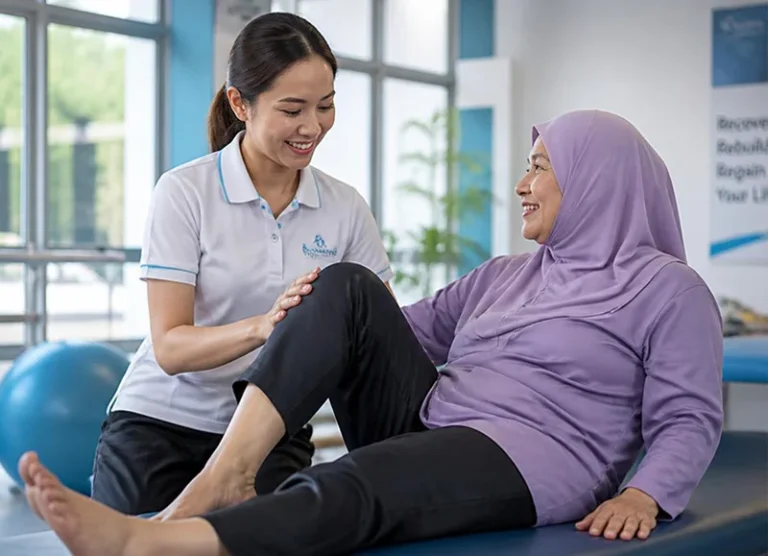
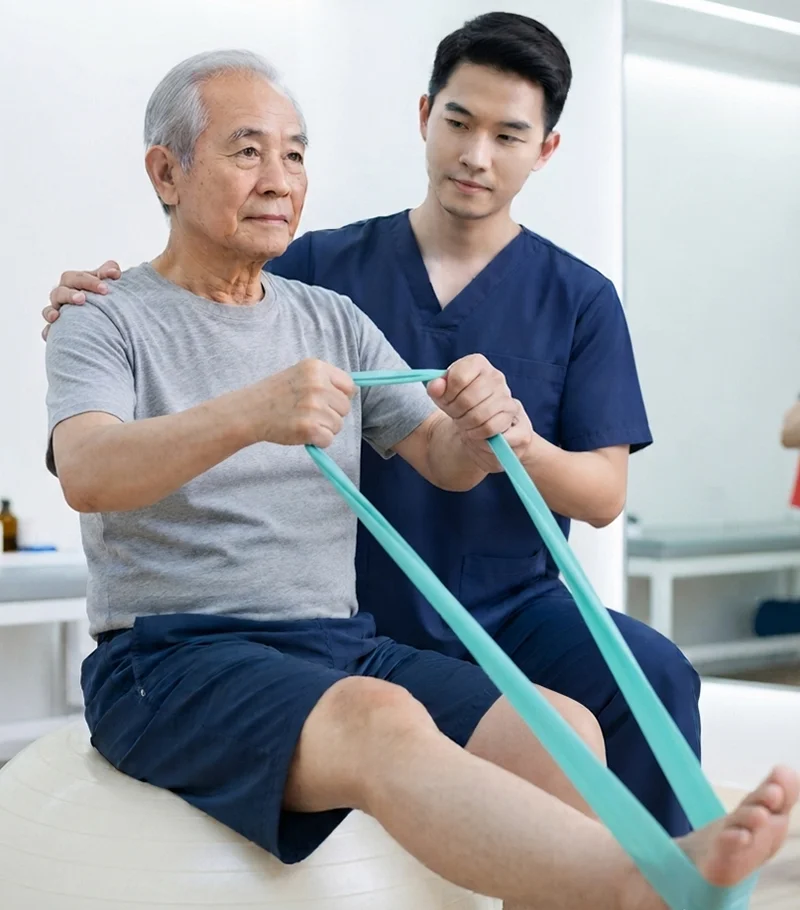
Rehabilitation helps stroke survivors practise movements and everyday activities while working towards improved function and independence.
Depending on the individual’s needs, rehabilitation may include:
- 🏃 Physiotherapy
- 🧩 Occupational therapy
- 🗣️ Speech and language therapy
- 👩⚕️ Nursing care
- ⚖️ Balance training
- 🚶 Walking practice
- 🎯 Functional training
- 👨👩👧 Family education
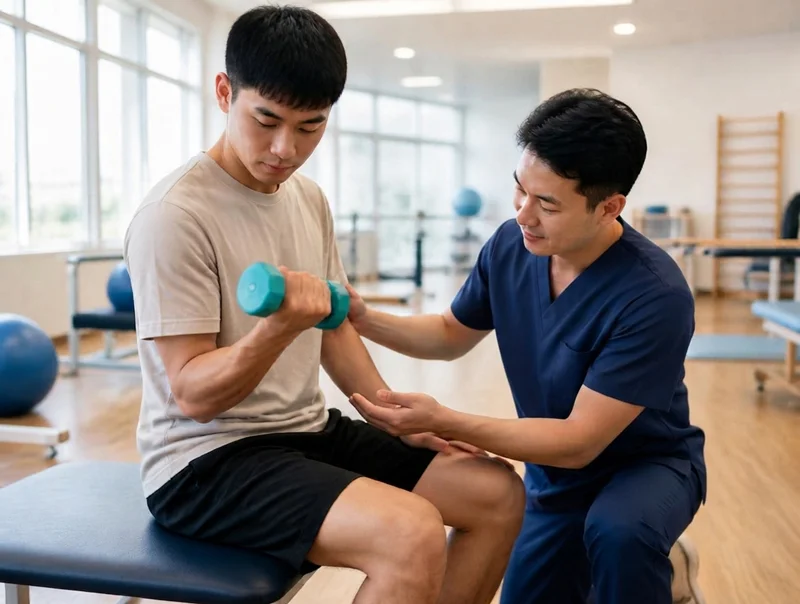
Rehabilitation should be tailored to the individual’s condition, abilities and recovery goals.
Starting rehabilitation as early as medically appropriate can help patients make the most of their recovery potential.
Stroke Rehabilitation Options in Johor Bahru
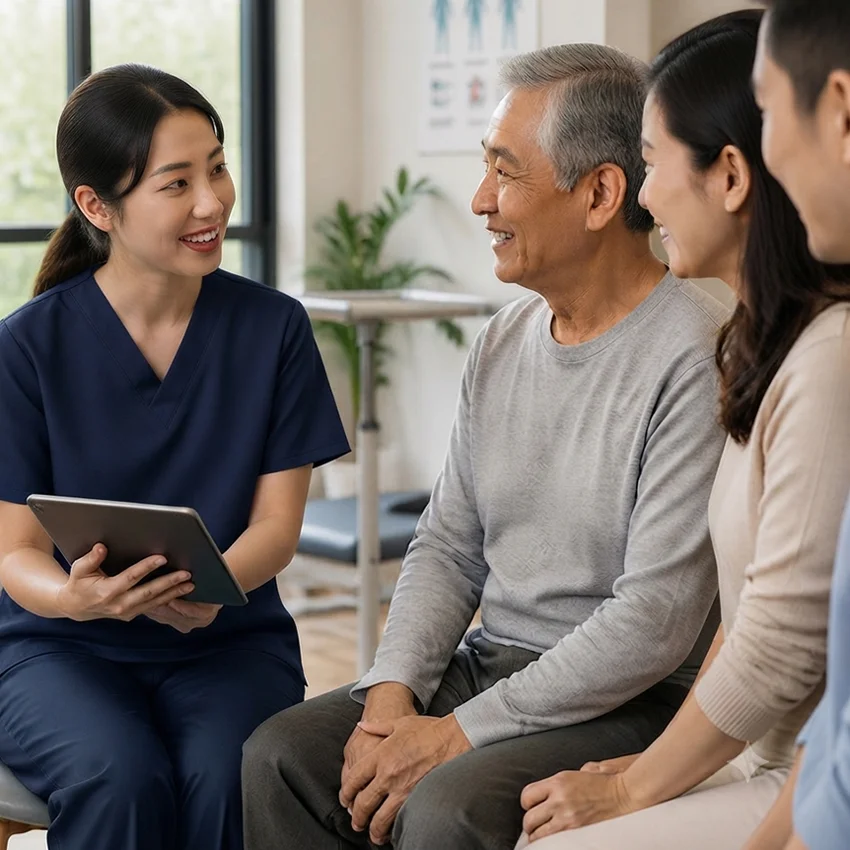
Families in Johor Bahru have several options for continuing stroke rehabilitation after hospital discharge.
🏠 Home Rehabilitation
Home rehabilitation may be suitable for individuals with milder impairments and adequate family or caregiver support.
The home environment should also be assessed to ensure it is safe for someone with reduced mobility or balance.
🏥 Outpatient Physiotherapy in Johor Bahru
Patients attend scheduled rehabilitation sessions while continuing to live at home.
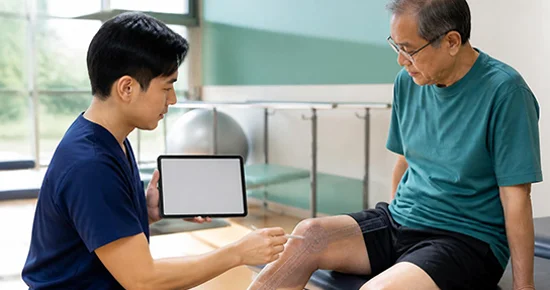
Outpatient physiotherapy may focus on walking, balance, strength, coordination and functional independence.
🏡 Residential Stroke Rehabilitation
Some stroke survivors benefit from structured residential rehabilitation programmes where physiotherapy, nursing care and daily recovery activities can be coordinated in one environment.
This may be particularly beneficial for individuals with:
- Reduced mobility
- Limited family support
- Higher levels of care needs
- Ongoing rehabilitation requirements
- Difficulty managing recovery independently at home
Can Stroke Survivors Walk Again?
This is one of the most common questions families ask after a stroke.
Many stroke survivors improve their walking ability through rehabilitation, although the extent and speed of recovery vary significantly between individuals.
Walking recovery can be influenced by:
- Severity of the stroke
- Muscle strength
- Balance
- Coordination
- Consistency of rehabilitation
- Overall health
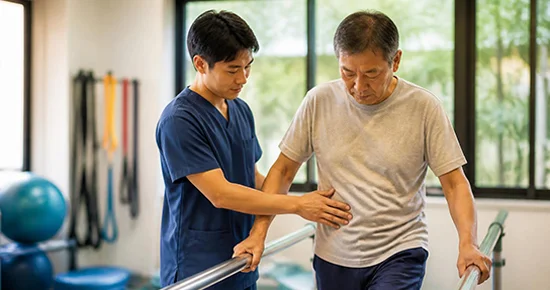
Walking recovery often occurs gradually through repeated practice and structured rehabilitation rather than overnight improvement.
Progress does not always happen in a straight line. A patient’s recovery may include periods of faster improvement, slower progress and temporary setbacks.
How Families Can Support Stroke Recovery
Family members play an essential role throughout the recovery process.
Helpful ways to provide support include:
- 💪 Encouraging participation in rehabilitation
- 🏠 Maintaining a safe home environment
- 🎉 Celebrating small improvements
- 📅 Attending follow-up appointments
- ❤️ Providing emotional encouragement
- 🥗 Supporting a healthy lifestyle
- 📝 Following the rehabilitation team’s recommendations
Recovery is a team effort involving healthcare professionals, caregivers, family members and the stroke survivor.
Frequently Asked questions.
Key Takeaways
- 🧠 Stroke recovery continues long after hospital discharge.
- 🏃 Early rehabilitation and physiotherapy can play an important role in recovery.
- 🎯 Every stroke survivor follows a unique recovery journey.
- ❤️ Family members and caregivers are an important part of successful rehabilitation.
- 📍 Johor Bahru offers different stroke rehabilitation options, including home rehabilitation, outpatient physiotherapy and structured residential recovery programmes.
Looking for Stroke Recovery Support in Johor Bahru?
If your loved one is recovering from a stroke and you are exploring stroke rehabilitation in Johor Bahru, understanding the available recovery pathways is the first step towards making an informed decision.
Choosing the right rehabilitation programme, physiotherapy plan and recovery environment can help support a safer and more structured return to daily life.
Recover. Rebuild. Regain Independence.
Speak with RecovA to learn more about post-stroke recovery and rehabilitation support.